
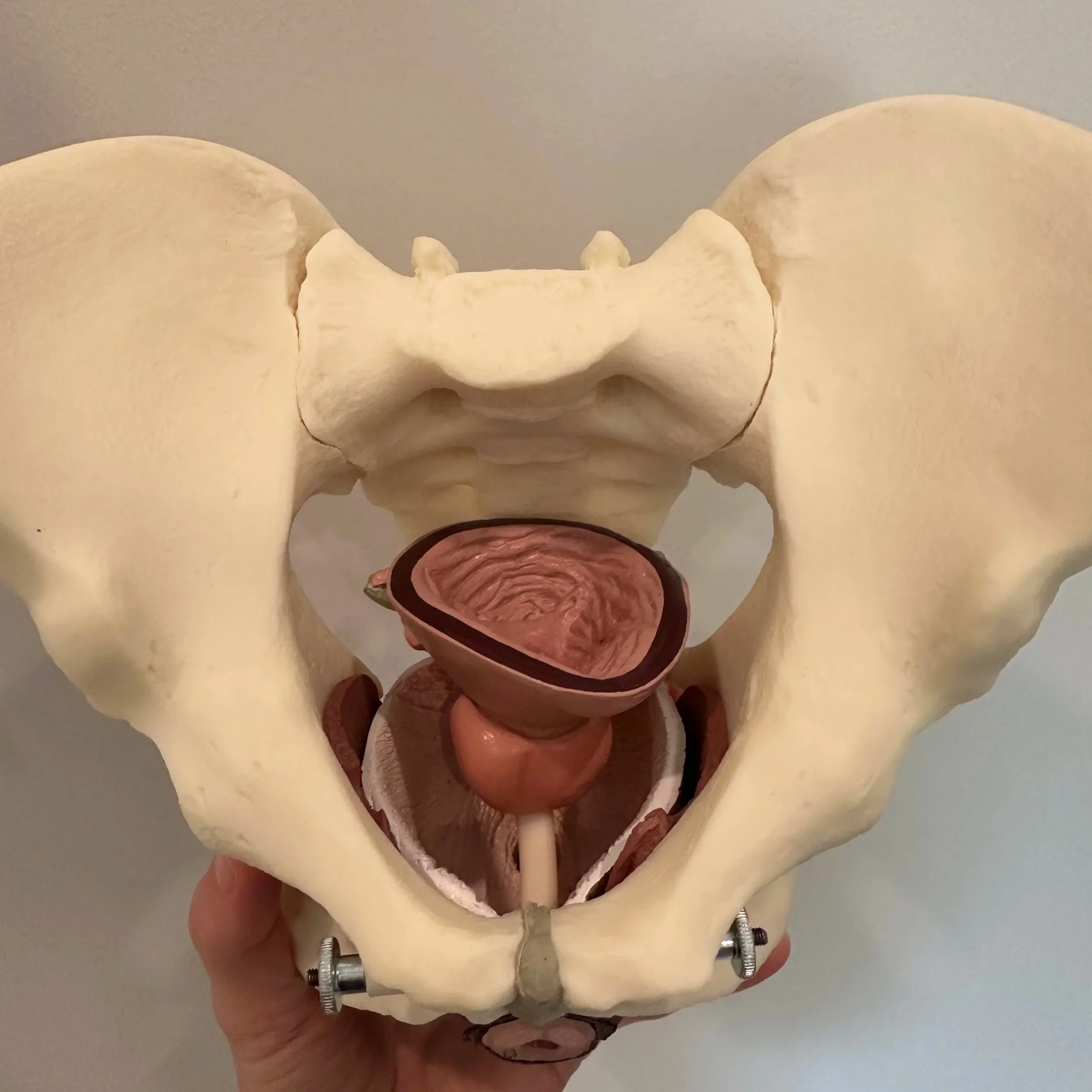
November is Bladder Health Awareness Month, and we’re here to remind you that bladder problems aren’t just a “women’s health thing!”
Meet your bladder: a hard-working little organ that stores urine until it’s time to go.
Meet your pelvic floor: a group of muscles that work behind the scenes to help you control when you go.
When everything works together, your body is happy! But when those pelvic floor muscles become weak, overly tight, or struggle to coordinate, your bladder might start making some unhelpful decisions.
What Is Urinary Incontinence?
Urinary incontinence is the accidental leaking of urine. Anyone can experience it, including men of all ages, and it can look a little different for everyone.
Here are a few common bladder troublemakers:
1. Stress Incontinence: “I Sneezed… and Oops!”
You’re lifting weights at the gym, coughing during allergy season, laughing at your buddy’s terrible joke, or bending down to pick something up. Suddenly, a little urine escapes.
Stress incontinence happens when pressure on your bladder exceeds your ability to hold it. This occurs when the pelvic floor structures responsible for bladder control do not provide enough support.
2. Urgency Incontinence: “GO. RIGHT. NOW.”
You suddenly feel like you have about three seconds to find a bathroom, so you drop everything and speed-walk down the hallway like you’re an Olympic track runner.
Urge incontinence involves urine leaking after a sudden, intense urge to urinate. It can be associated with overactive bladder (OAB), which may also cause frequent bathroom trips or nocturia (instances of waking up throughout the night).
3. Overflow Incontinence: “Why Am I STILL Dribbling?”
You finish using the bathroom, but your bladder doesn’t seem to totally empty. Maybe your stream is weak, it feels hard to start, or you notice dribbling afterward.
Overflow incontinence can happen when the bladder doesn’t fully empty or becomes overly full.
In men, one possible cause is an enlarged prostate that obstructs the flow of urine. Your prostate sits just below your bladder and surrounds part of your urethra. When your prostate changes in size, your bladder may notice!
Here are two common prostate conditions to know about:
Benign Prostatic Hyperplasia (BPH): An enlargement of the prostate that is not cancerous. The prostate naturally grows with age and can contribute to a weaker urine stream, difficulty starting to urinate, or trouble fully emptying the bladder.
An enlarged prostate doesn’t automatically mean you’ll have urinary symptoms.
Prostatitis: Inflammation of the prostate that can cause pelvic discomfort, pain with urination, and other urinary dysfunction symptoms. It can have different causes, including bacterial infections, but the most common type of prostatitis is chronic pelvic pain syndrome (which is caused by PFD), accounting for up to 90-95% of prostatitis.
Prostate surgery and radiation treatments can also affect bladder control, sometimes leading to urinary leakage.
So What Else Can Affect Your Male Pelvic Floor?
Your pelvic floor muscles do a LOT more than you might think. They help support your pelvic organs, contribute to bowel and bladder control, and play a role in sexual function.
A few things that may affect how these muscles work include:
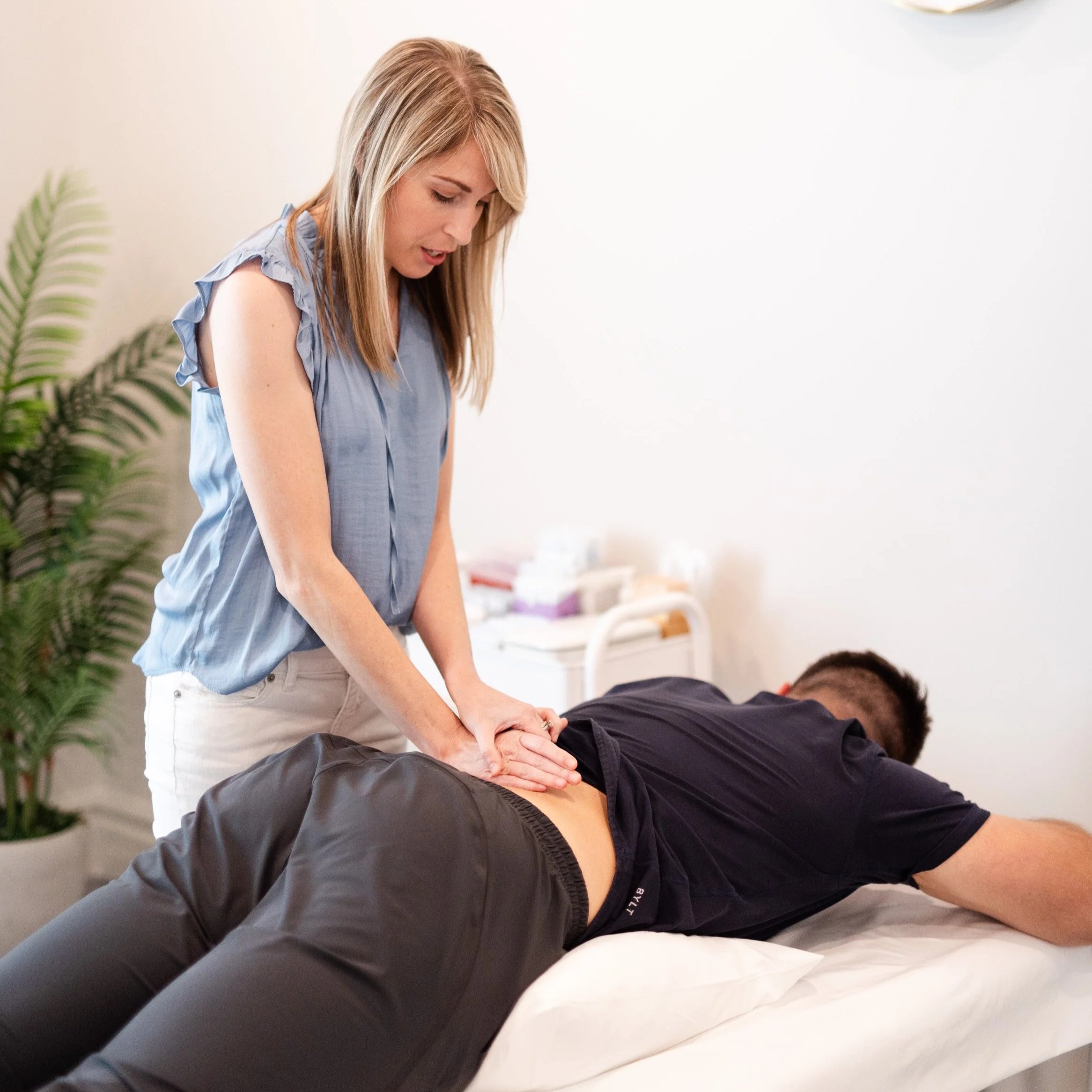
Getting older: Muscle strength and coordination can change with age.
Chronic coughing: Repeated increases in abdominal pressure can put extra strain on the pelvic floor.
Chronic constipation: Frequent straining can contribute to pelvic floor dysfunction.
Back or hip pain: Your pelvic floor muscles may tighten up to protect other painful areas, making it harder to relax.
You might also notice frequent urination, difficulty starting or stopping your stream, painful urination, pelvic or genital pain, or even changes in sexual function.
So… Should I Do Kegels?
You’ve probably heard that Kegels are the go-to exercise for pelvic floor health, and they're definitely helpful for many people! But here's something you might not know: your pelvic floor has to learn to relax just as much as it needs to learn to contract.
Think of your pelvic floor like any other muscle group. You wouldn't spend all day flexing your biceps without ever letting them relax, right? Your pelvic floor works the same way!
For some men, strengthening these muscles can improve bladder control and reduce urinary leakage. For others, the muscles may already be overly tight or struggle to coordinate properly, which means relaxation and mobility work may be the way to go!
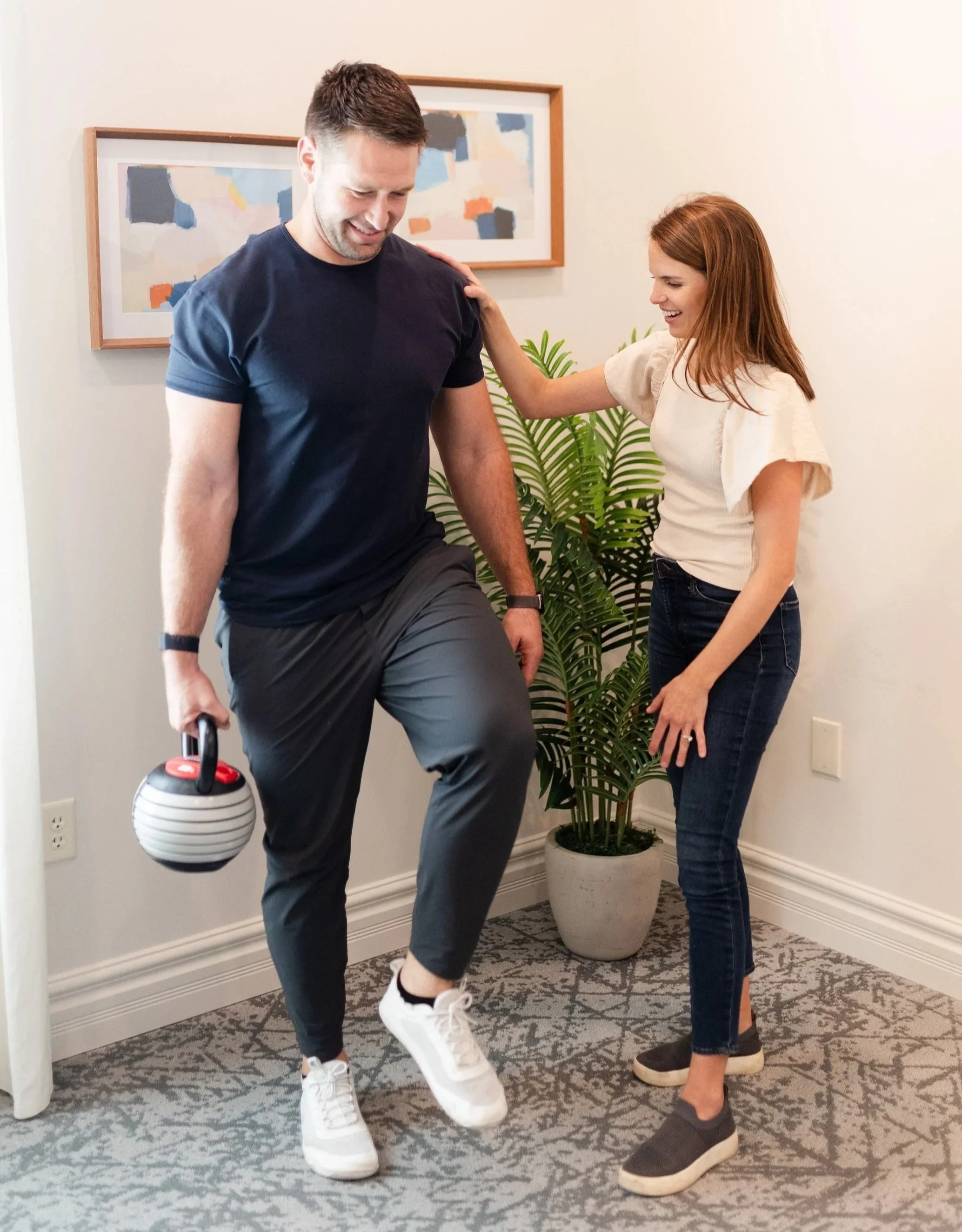
The goal isn't just a stronger pelvic floor. It's a pelvic floor that knows when to work and when to let go!
If you’ve been told by a pelvic floor physical therapist that kegels are the right treatment for you - you need to work on various types:
Longer holds (hold for 10 seconds or more)
Quick flicks (quick contraction with quick release)
Knack (kegel with intentional cough or increase in intra-abdominal pressure)
And doing all of these above in various positions such as standing, sitting, on all 4’s
If your pelvic floor is in an overactive state, then:
Try Some Of These Before You Start Strengthening:
Diaphragmatic breathing:
Put one hand on your chest and the other above your belly button. Inhale slowly through your nose. Feel your rib cage and belly expand outward against your hand while keeping your chest and shoulders relatively still. Exhale gently through your mouth, while feeling your belly deflate inward. As you get comfortable with this breathing, you can imagine the pelvic floor muscles expanding on the inhale and softening on the exhale. Repeat for 5-10 minutes.
Pelvic floor relaxation meditations:
Pelvic floor Stretches such as:
Child’s pose
Happy Baby
Figure 4 Stretch
Cat Cow
Taking Control of Your Bladder Health:
Pelvic floor health isn’t just a "women's health thing"… it’s a human thing. Whether you’re tired of rushing to the bathroom, dealing with unexpected leaks when you cough or lift, or navigating changes after prostate treatment, we’re here to help!
Your pelvic floor works hard every single day. By understanding how it functions and learning that it needs to know how to relax just as much as it contracts you can take the first step toward real relief.
If you’re ready to get personalized answers instead of guessing your way through pelvic floor exercises, come chat with us.