
How Do I Know If I Have a Weak Pelvic Floor?
If you've ever giggled at a joke, coughed during allergy season, or tried to lift your kid for the best Mardi Gras throw only to feel a sudden, unwelcome urine leak - you aren’t alone!
At NOLA Pelvic Health, one of the most common questions we hear from moms, runners, and weightlifters is: "How do I know if my pelvic floor is weak?"
Most people think if they are experiencing urine leaks, heaviness, or pelvic pain they automatically have weakness and need to do hundreds of kegels a day to strengthen their pelvic floor. However, as pelvic floor PTs, we are here to enlighten you on a HUGE misconception: your symptoms may not be caused by weakness at all.
So, let’s uncover some hard facts about the actual signs of pelvic floor dysfunction and figure out what your body is trying to tell you!
What Does the Pelvic Floor Actually Do?
To understand if your muscles are weak, we first have to look at how they function. I like to think of your core as a canister:
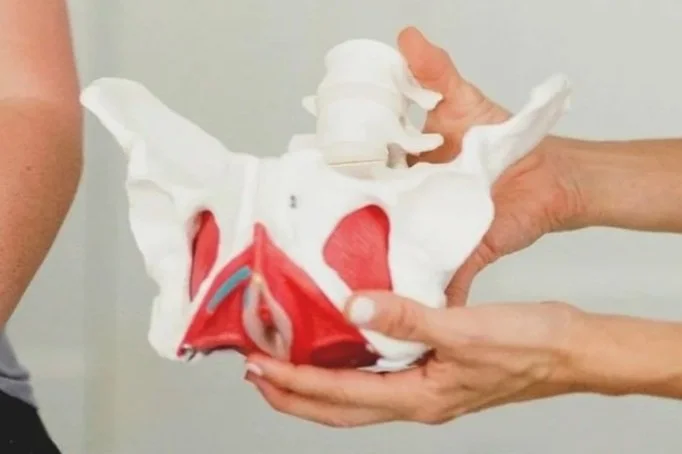
The Lid: Your diaphragm (breathing muscle)
The Sides: Your abdominals and lower back muscles
The Base: Your pelvic floor
Your pelvic floor muscles act like a dynamic hammock supporting your bladder, bowel, and uterus. When you take a breath in, the diaphragm moves down, and the pelvic floor gently lengthens to accept that movement. When you exhale, the system naturally lifts back up and in.
Thankfully this system is highly reflexive and when it is optimally coordinated, you can run, jump, sneeze, and lift without a second thought.
But sometimes that system is disrupted and our bodies can’t handle certain loads or they need to be retrained to work more effectively such as during pregnancy, postpartum, or menopause.
When that is the case, pelvic floor therapy may be the right answer for you.
5 Common Signs of Pelvic Floor Dysfunction
Whether you are three months or three years postpartum, pelvic floor changes can sneak up on you gradually until they hit a breaking point. Here are the primary signs that your core/pelvic floor/body needs some attention:
1. Urinary Leakage
Leaking urine when you laugh, cough, sneeze, or do high-impact exercise (like running or jumping jacks) is a classic sign that something is not working quite right. This can happen if pelvic floor coordination is not quick enough to respond to the high load of internal pressure occurring.
2. Feeling Heaviness or Pressure
Many women describe a sensation of pressure or feeling like something is “falling out of their pelvis”, especially at the end of a long day. This can be a sign of pelvic organ prolapse, where the muscular support system is struggling to hold everything against gravity.
3. Frequent or Sudden Urges to Go
Do you find yourself "just-in-case" peeing before you leave the house, or running to the bathroom the second you hear running water? An overactive bladder can actually be caused by muscles that are too tight and irritated, rather than weak.
4. Pain with Intimacy or Tampon Use
If pelvic exams, tampons, or intercourse feel deeply uncomfortable, raw, or burning your muscles might be stuck in a constant, protective guard or spasm and they need to learn how to release and lengthen instead of shorten and tighten through contractions/kegels.
5. Low Back or Hip Pain That Won’t Go Away
Because the pelvic floor connects directly to your hips and deep core, a coordination issue in the pelvis can often show up as chronic lower back stiffness or nagging hip pain that stretching never seems to fix.
Weak vs. Hypertonic

Here is the most important takeaway: A tight muscle is not a strong muscle nor is a strong muscle a tight muscle. These muscles need to move through their entire range of motion at the right time without us really having to think about it for them to be the most functional!
Many athletic individuals with pelvic floor dysfunction, especially those doing intense Pilates, Megaformer workouts, running, or heavy lifting, may not have a weak pelvic floor. Instead, they could have a hypertonic (overactive) pelvic floor. Their muscles are clenching all day long, never fully relaxing.
Think about clenching your fist as tight as you can for three hours. If someone asks you to punch a punching bag, your hand will feel weak and exhausted because it never got to rest. The same thing happens to your pelvic floor. If it can't fully relax, it can't contract quickly enough to stop a leak when you sneeze or support your organs during higher impact activities.
**Why Kegels Might Make It Worse:**
If your pelvic floor is already stuck in a tight, shortened position, doing endless, unguided Kegels is like doing bicep curls on a muscle that's already cramped. It can actually increase your leaking, pain, and urgency.
How to Test Your Strategy at Home
Next time you work out or feel a sneeze coming on, notice your automatic response:
Are you holding your breath?
Are you bearing down and pushing outward like pouching your abdominals?
If so, that could increase pressure down onto your pelvic floor muscle hammock and it may not be able to accept that load!
Instead, don’t hold back a sneeze or cough AND you can try a gentle kegel right before and during the sneeze or cough to somewhat brace the system. But remember to let the pelvic floor release afterwards so you don’t have an overactive pelvic floor system.
Expert Pelvic Floor Therapy in New Orleans

You do not have to live with leaks or pelvic pain! And you don’t have to guess whether your body needs more strength or more length.
Schedule an assessment with one of our expert PTs to stop the guesswork and get a clinical assessment and treatment plan that is best for you!
At NOLA Pelvic Health, we help all people of all genders move past the breaking point and return to the movement they love without fear. We look at your breathing, your hip strength, and your unique core strategy to build a plan tailored strictly to you.