
A PT’s Guide to Navigating Physical Changes and Pelvic Health During Pregnancy
NOLA Pelvic Health’s Approach to Pregnancy Care
We don’t believe pregnancy means stopping movement — and we also don’t believe in pushing through pain.
While you can begin pelvic floor physical therapy at any stage of pregnancy, we generally recommend a baseline visit at the start of your second trimester. That said, if you are experiencing pain, leakage, or constipation—or simply have questions about your changing body—don't wait. We are here to provide clarity and support the moment you need it.
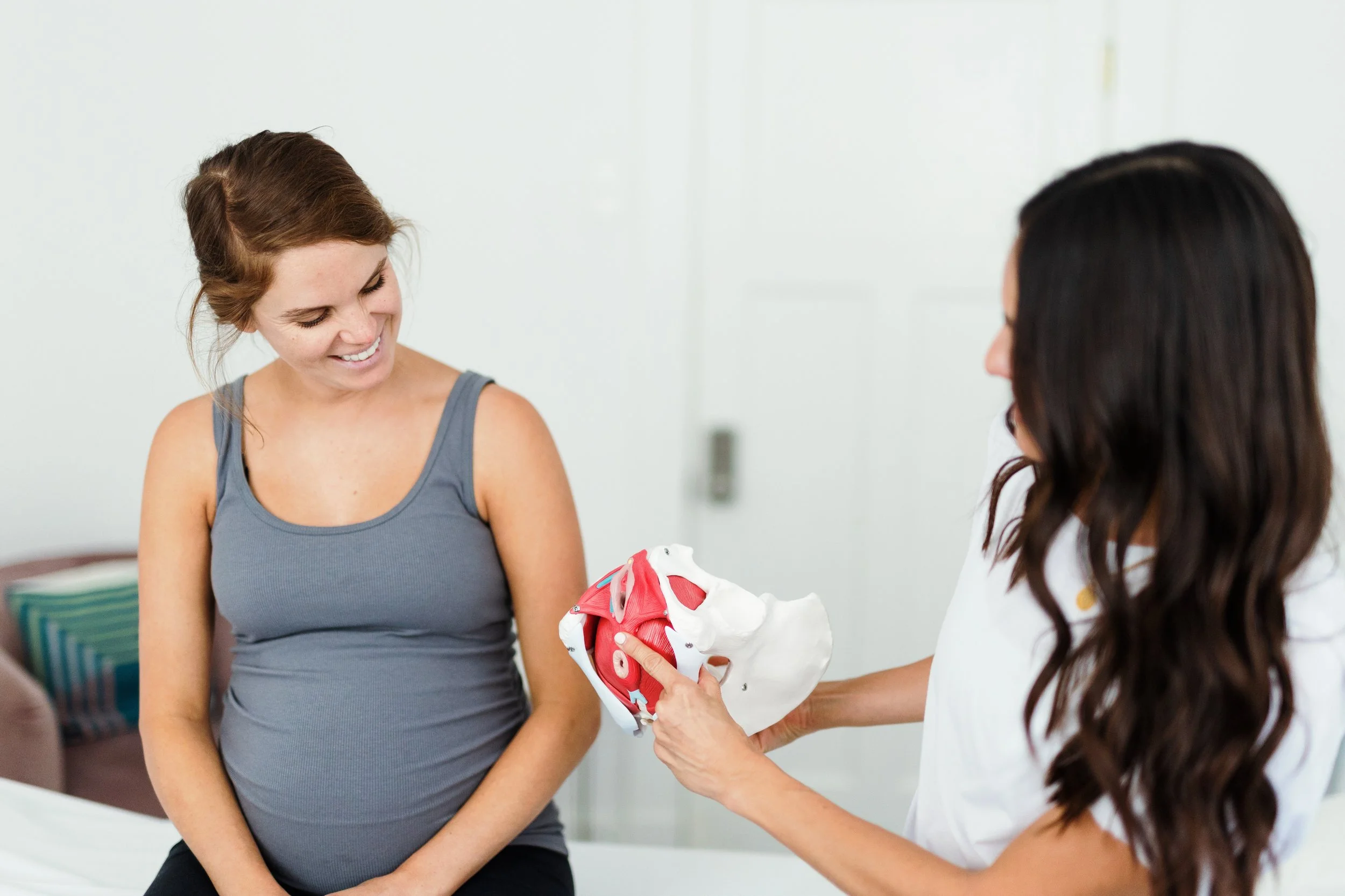
At NOLA Pelvic Health, your care is guided by:
Evidence based exercise and movement strategies
Pelvic floor and core coordination
Strength and stability that evolves as you grow
Breath and pressure management for daily life and exercise
Education that reduces fear and confusion
Our goal is to help you adapt, not restrict.
So where do we start…
Understanding the Core “Canister”
The Deep Core: Diaphragm, Transverse Abdominus, Multifidi, and Pelvic Floor
Think of your core as a pressure cylinder: the diaphragm is the lid, the pelvic floor is the base, and the transverse abdominis (deepest belly muscle) and multifidi (deepest back muscle) form the supportive walls.
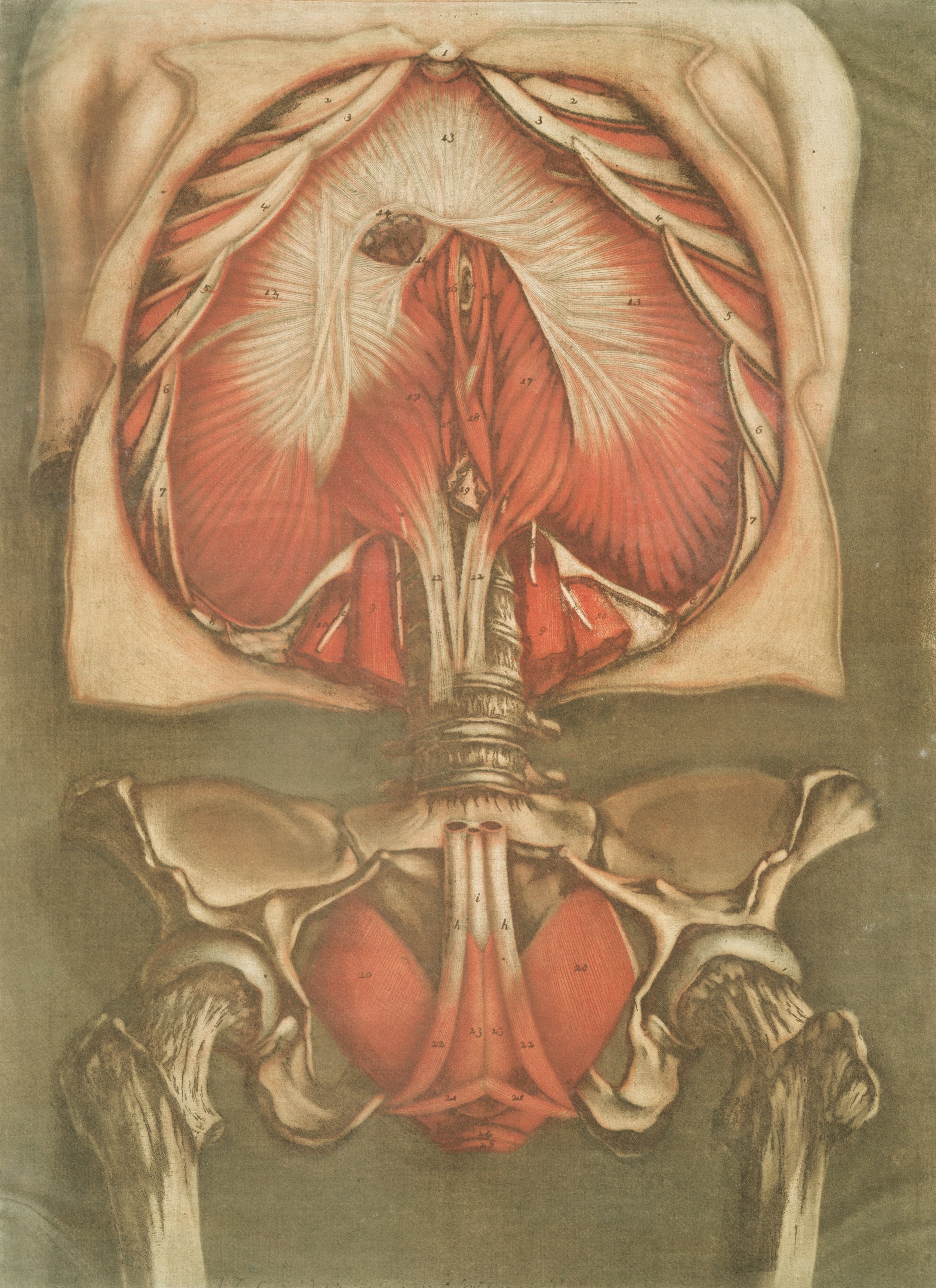
During a functional breath, this cylinder moves in harmony.
When you inhale, the diaphragm and pelvic floor gently descend together (the 'down and out' phase).
As you exhale, the diaphragm lifts back up, and the pelvic floor reflexively follows.
Practicing this diaphragmatic breathing throughout the day isn't just about relaxation; it promotes passive mobility in your pelvic floor and abdominal wall, supporting healthy circulation and optimal muscle tone.
In a functioning system, this cylinder reflexively stabilizes you during daily tasks—like bending, reaching overhead, or lifting your baby. However, during pregnancy or the postpartum period, this reflexive strength can be disrupted, leading to the common dysfunctions we see in the clinic.
When the Core Canister Can’t Keep Up…
As our bodies grow, ligaments relax, and posture changes, we may notice pelvic dysfunction arise. This can present itself in a variety of ways, including:
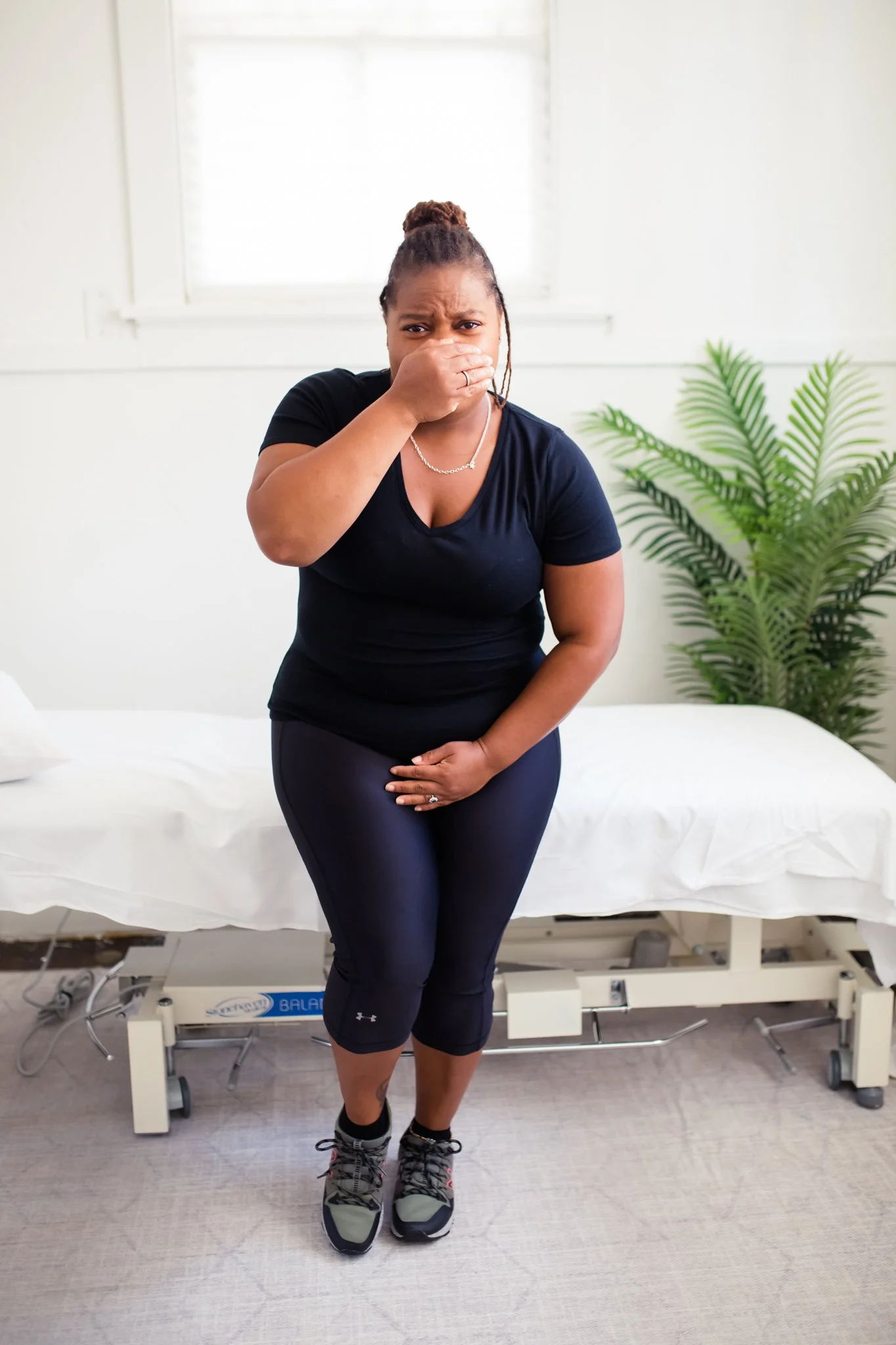
Hernias/Hemorrhoids
Stability in Motion: The Anterior Oblique Sling
While the "Canister" manages internal pressure, your Anterior Oblique Sling (AOS) manages your external stability. This system connects your oblique muscles to your opposite hip adductors (inner thighs). During pregnancy, as your center of gravity shifts, this sling works overtime to "zip up" the front of your pelvis and stabilize your pubic bone.
When this sling is weak or uncoordinated, you might feel that "instability" when walking or lifting.
In our clinic, we don't just look at the pelvic floor in isolation; we train the various slings to ensure your whole body supports your growing bump.
Can Physical Therapy Help With Pregnancy Changes?
Short answer: Yes!
What to Expect During Your PT Sessions:
We meet you where you are:
If you’re already an avid exerciser and want to continue with this, without dysfunction we prioritize core function, hip strength, and postural stability.
If you’re new to physical activity, we ensure you have an optimal foundation of strength and appropriate guidelines based on where your mind and body are!
At every stage of your journey, our team provides the specialized pelvic health care New Orleans’ moms deserve, ensuring you feel confident and supported as your body changes.
We provide:
Education and practice on diaphragmatic breathing, sleep habits, bladder and bowel norms
Exercises for core and postural strengthening
Manual Treatment including myofascial release, sacral and hip mobilization, dry needling, cupping, and perineal massage
Every pregnant patient gets an individualized treatment based on their assessment and goals!
Beyond the Clinic
While our in-person sessions at NOLA Pelvic Health are where the deep retraining happens, your progress is fueled by what you do in between visits. This can happen through our hybrid program and through small changes made daily!
Here are two "PT-approved" shifts you can start today:
Master Breathing
One of the simplest ways to manage the pressure in your "core canister" is to coordinate your breath with your movement. Whenever you are lifting your toddler, getting out of the car, or even rising from a chair, try to exhale through the effort. This "blow as you go" technique helps the diaphragm and pelvic floor lift together to improve your core effort!
Mindful Postural Control
As your bump grows, your center of gravity shifts forward. This often causes our glutes to clench, shoulders to round forward, and back to excessively arch. Even though, these are “natural” changes occurring, our bodies love variability. So throughout the day in standing, shift back and forth and side to side through your feet to find different postures and take strain off overworked areas.
Last Note For Your Pregnancy Journey
Pregnancy is a season of profound change, but it shouldn't be a season of silent struggle. By understanding your core 'canister' and learning how to manage pressure, you are doing more than just preventing leaks—you are building a foundation for a stronger recovery and a more empowered birth experience.
Partner with NOLA Pelvic Health
You don't have to navigate these changes alone. Whether you're ready for a second-trimester baseline check-in or you need a customized plan to address pain and pressure, we are here to help you thrive.